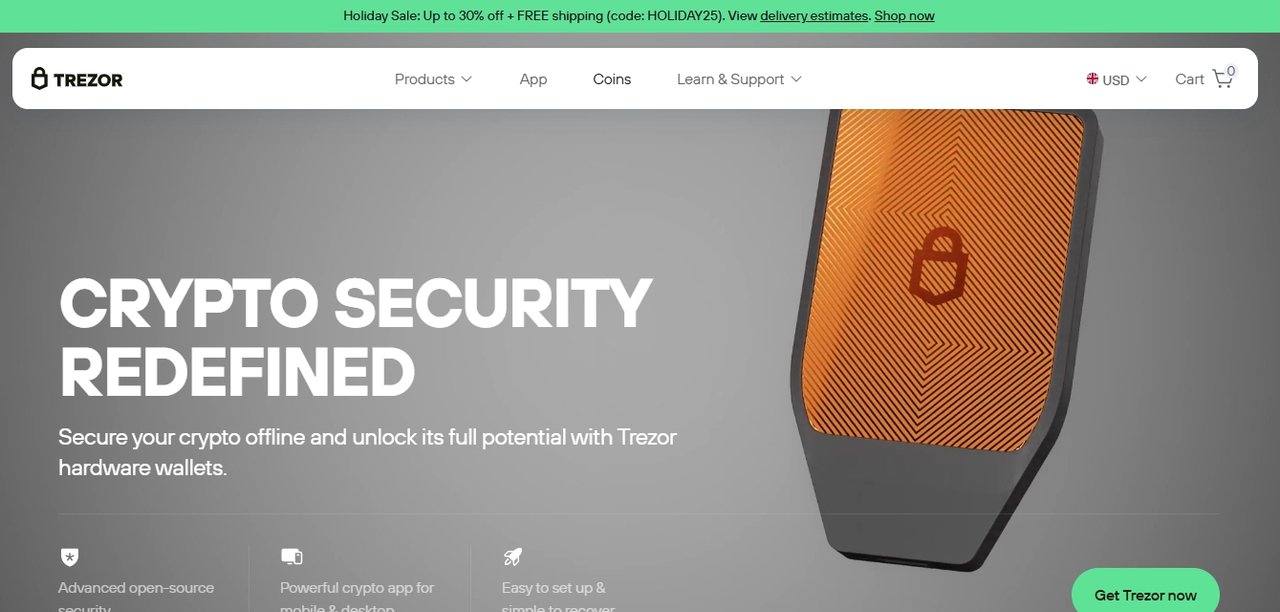
Welcome to Trezor Suite
Trezor Suite is the official desktop and mobile application for managing your Trezor hardware wallet. It serves as a secure, user-friendly interface that enables you to manage multiple cryptocurrencies, track your portfolio, send and receive funds, and update your device safely.
Designed to work seamlessly with Trezor hardware wallets, Trezor Suite ensures that your private keys remain offline, providing the highest level of security while still offering a convenient experience for managing your digital assets.
Whether you are a beginner starting with your first cryptocurrency or an advanced user managing multiple accounts and digital assets, Trezor Suite is your gateway to a secure, efficient, and organized crypto experience.
Why Use Trezor Suite
Security and usability are the two pillars of Trezor Suite. Cryptocurrency management requires both secure storage of private keys and a reliable interface to interact with digital assets.
Key Benefits:
Full Self-Custody: Your private keys never leave your hardware wallet. You retain complete control over your assets.
Secure Transactions: Every transaction must be verified physically on your Trezor device, preventing unauthorized access.
Multi-Currency Support: Manage Bitcoin, Ethereum, and hundreds of other cryptocurrencies within one interface.
Portfolio Tracking: Monitor your assets, transaction history, and performance from a single dashboard.
Device Management: Keep your hardware wallet firmware updated and check device authenticity.
Trezor Suite bridges the gap between offline security and digital convenience, allowing users to safely interact with the blockchain while keeping their assets protected.
Getting Started with Trezor Suite
Before you start using Trezor Suite, ensure you have:
A Trezor hardware wallet (Trezor One or Trezor Model T)
A computer or mobile device with internet access
The latest version of Trezor Suite installed
Step 1: Download and Install
Download Trezor Suite exclusively from the official source: https://suite.trezor.io. Avoid third-party downloads or links from emails, as these may be phishing attempts.
After downloading:
Install the app on your computer or mobile device.
Launch Trezor Suite and connect your Trezor hardware wallet using the supplied USB cable (USB-C for Trezor Model T).
Step 2: Initialize Your Device
When you connect your Trezor wallet to Trezor Suite for the first time, you will need to initialize it.
Create a New Wallet: Generates a new recovery seed and sets up a PIN code.
Recover an Existing Wallet: Input your existing recovery seed to restore access to your previous wallet.
During initialization:
Set a secure PIN code to prevent unauthorized access.
Record and securely store your recovery seed, which is your master backup.
Optionally, add a passphrase for extra security.
Step 3: Secure Your Recovery Seed
Your recovery seed is the most important security element of your wallet. It is a set of 12, 18, or 24 words that allows you to restore your wallet in case your device is lost, stolen, or damaged.
Best Practices for Recovery Seed:
Write it down on the provided card or another secure offline medium.
Never store it digitally or online.
Store it in a safe, private location.
Never share it with anyone. Trezor staff will never ask for it.
A securely stored recovery seed ensures that even if your device is compromised, your funds can be safely recovered.
Step 4: Optional Passphrase
Trezor Suite allows you to add an optional passphrase to your wallet. This passphrase creates a hidden wallet on top of your standard wallet, providing an additional layer of security.
A passphrase must be entered each time you unlock your wallet.
Without the correct passphrase, even someone with your recovery seed cannot access your hidden wallet.
This feature is particularly useful for high-value wallets or for additional privacy.
Step 5: Adding Cryptocurrency Accounts
Trezor Suite supports hundreds of cryptocurrencies and tokens. After setup, you can:
Add accounts for Bitcoin, Ethereum, and altcoins.
Manage multiple accounts in a single interface.
Organize wallets for different purposes, such as savings, trading, or staking.
Each account is linked to your Trezor device, and all transactions require device confirmation, ensuring that private keys never leave the hardware wallet.
Step 6: Sending and Receiving Cryptocurrency
Trezor Suite simplifies sending and receiving cryptocurrencies securely:
Send Crypto: Enter the recipient’s address, specify the amount, and confirm the transaction on your Trezor device.
Receive Crypto: Generate an address for incoming funds and verify it directly on your device.
By confirming transactions on your Trezor device, you protect your funds from malware or phishing attacks.
Step 7: Monitoring Your Portfolio
Trezor Suite provides a comprehensive dashboard to monitor your portfolio:
Total value in your preferred fiat currency
Distribution of assets across multiple cryptocurrencies
Historical transaction history
Real-time updates on transaction confirmations and network fees
Portfolio tracking allows you to make informed decisions and maintain a clear overview of your holdings.
Step 8: Device Management
Trezor Suite also allows you to manage your hardware wallet directly:
Firmware Updates: Keep your device updated with the latest security improvements.
Device Authenticity Checks: Verify that your Trezor hardware is genuine and has not been tampered with.
App Management: Install or remove apps for supported cryptocurrencies safely.
Regular device maintenance ensures your wallet remains secure and functional.
Step 9: Security Best Practices
Even with Trezor Suite’s built-in security, users must follow best practices to maximize protection:
Only download Trezor Suite from official sources.
Keep your recovery seed offline and in a secure location.
Protect your PIN and passphrase carefully.
Verify all transactions on the Trezor device.
Avoid phishing attempts and suspicious links.
Following these practices ensures your digital assets remain secure, even if your computer or smartphone is compromised.
Step 10: Using Trezor Suite with Third-Party Services
Trezor Suite also integrates with third-party applications and services, such as decentralized finance (DeFi) platforms, exchanges, and other wallets.
Access DeFi platforms safely by connecting through Trezor Suite.
Manage tokens across multiple blockchains without exposing private keys.
Always verify transactions on your Trezor device when interacting with external services.
This integration expands the capabilities of your Trezor wallet while maintaining security.
Step 11: Troubleshooting and Support
If you encounter issues with Trezor Suite:
Check the Trezor support site for guides, FAQs, and troubleshooting tips.
Make sure your Trezor firmware and Trezor Suite are updated.
Contact Trezor support directly through official channels.
Avoid third-party support services or emails claiming to help, as these may be phishing attempts.
Why Security Matters
Trezor Suite is designed around the principle of self-custody, meaning you control your private keys at all times. The combination of hardware wallet security and Trezor Suite’s software interface ensures that:
Private keys never leave your device.
Transactions are confirmed physically on the device.
Your funds remain safe even if your computer or phone is compromised.
This layered approach to security provides peace of mind and ensures that your crypto holdings are always protected.
Advanced Features
Trezor Suite also provides advanced features for experienced users:
Multiple Wallet Management: Create separate wallets for different purposes or cryptocurrencies.
Hidden Wallets with Passphrase: Add privacy and extra protection.
Detailed Analytics: Track asset performance, historical trends, and transaction history.
Integration with Exchanges and DeFi: Use Trezor Suite to securely interact with third-party services without compromising private keys.
These features make Trezor Suite a versatile tool for both beginners and advanced users.
Getting the Most Out of Trezor Suite
To maximize your experience with Trezor Suite:
Regularly update your device firmware.
Enable optional passphrases for added security.
Use Trezor Suite to monitor portfolio performance and transaction history.
Confirm every transaction physically on your device.
Explore supported tokens and cryptocurrencies to diversify your portfolio safely.
By following these steps, you maintain full control over your assets while enjoying the convenience of modern cryptocurrency management.
Conclusion
Trezor Suite is more than just a wallet interface—it is a complete ecosystem for securely managing your cryptocurrency. By combining the offline security of your Trezor hardware wallet with the usability and functionality of Trezor Suite, you gain:
Secure and convenient management of multiple cryptocurrencies
Full control over private keys and self-custody
Portfolio tracking, analytics, and transaction history
Integration with third-party platforms while maintaining security
Peace of mind that your assets are protected against theft or hacking
Whether you are just starting in cryptocurrency or are an advanced user managing multiple wallets, Trezor Suite provides the tools, security, and flexibility needed for a safe and efficient crypto experience.
With Trezor Suite, your digital assets remain secure, organized, and fully under your control—making it the ultimate companion for your Trezor hardware wallet.